
A cleaning contract that only says "stairwell cleaned weekly" invites disagreements. Residents complain, the provider points to the contract, and the property manager sits in the middle. A clear service level agreement, or SLA, prevents this. Our building cleaning in Zurich is built around exactly this kind of clarity.
This guide explains what a good cleaning SLA for property managers in Zurich should contain, which requirements are worth including, and how to check that the agreed standard is actually delivered.
What Is a Cleaning SLA?
A cleaning SLA is the part of a contract that defines what will be cleaned, how often, to which standard, and how the result is checked. It turns general expectations into measurable commitments for both sides.
For property administration, this matters because many people judge the result: tenants, owners, and the board. A written standard gives you a reliable basis for conversations with all of them.
The Core Elements Every SLA Should Include
The table below summarises the main elements and what a clear requirement looks like. Use it as a checklist when you review an offer or an existing contract.
|
SLA Element |
What to Require |
|
Scope of work |
A written list of areas and tasks, such as entrance, stairwell, lift, cellar corridor, and windows. |
|
Frequency |
Exact intervals per area, for example weekly, twice a week, or monthly. |
|
Quality standard |
A clear description of what "clean" means, such as streak-free glass and dust-free handrails. |
|
Inspections |
Regular checks by the provider and the right to carry out your own spot checks. |
|
Reporting |
A short report or checklist after each visit or each month. |
|
Response time |
A maximum time to react to complaints and urgent requests. |
|
Staffing |
A stable team, a named contact person, and a clear substitute arrangement. |
|
Insurance |
Proof of liability insurance for damage during the work. |
|
Materials |
Who supplies cleaning products and consumables, and the standard of those products. |
|
Review and exit |
Regular review meetings and clear notice periods. |
Key takeaway: an SLA works only when each point can be checked. If you cannot tell whether a requirement was met, it is too vague.
Define the Scope in Detail
The scope is the heart of the agreement. A list of areas and tasks removes guesswork and prevents the typical argument about what was included.
• Areas: entrance, stairwells, lifts, corridors, cellar and attic corridors, bicycle rooms, and waste rooms.
• Tasks: vacuuming, wet mopping, dusting, wiping handrails and door handles, cleaning glass doors, and emptying bins.
• Exclusions: name what is not part of the contract, such as winter service or garden work, so there are no surprises.
• Extras: list periodic jobs separately, such as window cleaning or floor care.
Our staircase cleaning and maintenance services can be written into the scope in exactly this way.
Set Frequencies That Match How the Building Is Used
The right frequency depends on the size of the building, the number of residents, and the weather. A small building with few residents needs less than a large complex with heavy traffic.
|
Area |
Typical Frequency to Consider |
|
Entrance and lift |
Once or twice a week, or more in busy buildings |
|
Stairwells |
Weekly or every second week |
|
Cellar and attic corridors |
Monthly or quarterly |
|
Glass doors and handrails |
Weekly, as part of the regular round |
|
Windows in common areas |
Several times a year |
|
Waste rooms and bicycle rooms |
Monthly |
These intervals are starting points, not rules. In autumn and winter, wet leaves, mud, and salt often justify an additional visit or a more thorough floor clean.
Define "Clean" in Measurable Terms
"Clean" means different things to different people. A good SLA describes the expected result in terms that anyone can check.
• Floors are free from visible dirt, dust, and stains.
• Glass surfaces are free from streaks and fingerprints.
• Handrails and door handles are wiped and free from dust and marks.
• Bins are emptied and have no overflowing waste.
• No unpleasant odours remain in common areas.
A short photo checklist per visit makes these points even easier to verify. It also protects the provider against unfair complaints.
Inspections, Reporting, and Complaint Handling
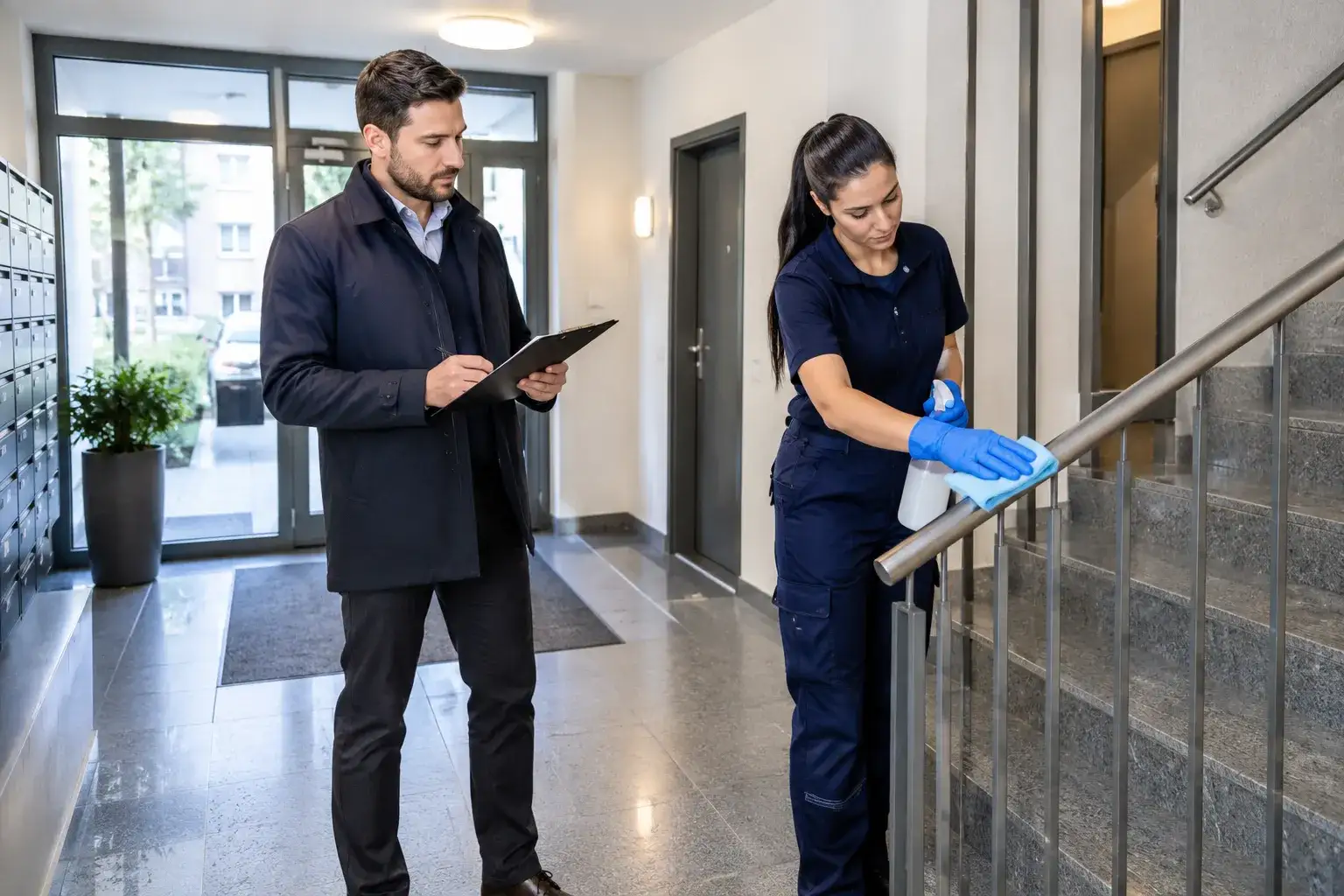
Agreed standards only matter if someone checks them. A simple routine keeps quality visible without creating extra work.
1. Provider self-check
The team completes a checklist after each visit and notes any problems.
2. Monthly summary
The provider sends a short report with completed tasks and open points.
3. Spot checks
The property manager can inspect the building at any time and report findings.
4. Complaint handling
Complaints are answered within an agreed time, and the issue is corrected without extra charge.
5. Review meeting
Once or twice a year, both sides review the results and adjust the scope if needed.
Staffing, Continuity, and Access
Quality often depends on people. A rotating team that changes every week usually leads to uneven results, while a stable team learns the building and its details.
• Named contact: one person for the property manager and one for the residents.
• Substitutes: a clear plan for sickness and holidays, so no visit is missed.
• Keys and access: a documented process for key handling, alarm codes, and access to technical rooms.
• Conduct: respectful behaviour towards residents and care for shared property.
Insurance, Products, and Sustainability
Ask for proof of liability insurance, because damage to floors or fittings can happen. Also agree on the cleaning products. Certified, non-toxic products protect residents, children, and pets, and they reduce the environmental impact of the building.
If the property has sensitive surfaces, such as natural stone or parquet, include a requirement to use suitable products and methods for each material.
Communication With Residents
Residents notice cleaning more than anyone else, so clear communication helps. A short notice in the entrance with the cleaning days and a contact for complaints reduces calls to the administration.
• Post the cleaning schedule in the entrance.
• Name a contact for urgent issues, for example a spilled liquid or a blocked bin room.
• Inform residents in advance when floors are wet or when additional work is planned.
Seasonal Planning and Special Situations
Buildings do not stay the same all year. A good SLA expects this and describes how the provider reacts when conditions change.
• Autumn and winter: wet leaves, mud, and salt on shoes call for extra floor cleaning, so agree on an additional visit or a flexible frequency.
• Moving season: dust, marks on walls, and left-behind items are common at the end of the month, so plan a short extra round.
• Incidents: spills, vomit, or water damage need a quick reaction, and the SLA should name a contact and a response time.
• Renovations: construction dust needs separate cleaning, which should be listed as an extra service.
Naming these cases in advance avoids discussions later, because both sides already know who does what and when.
A backup plan for unexpected events, such as a broken lift or a blocked access road, also belongs in a good agreement. This keeps the building in good condition even when the normal routine is disrupted.
Common Mistakes in Cleaning Contracts
• Describing the service in one general sentence instead of a task list.
• Leaving out the quality standard, so "clean" stays open to interpretation.
• Not agreeing on a response time for complaints.
• Forgetting to define who supplies consumables and materials.
• Signing a long contract without a review meeting or an exit clause.
• Choosing a provider based only on the lowest offer, without checking references.
How Züriclean Works With Property Managers
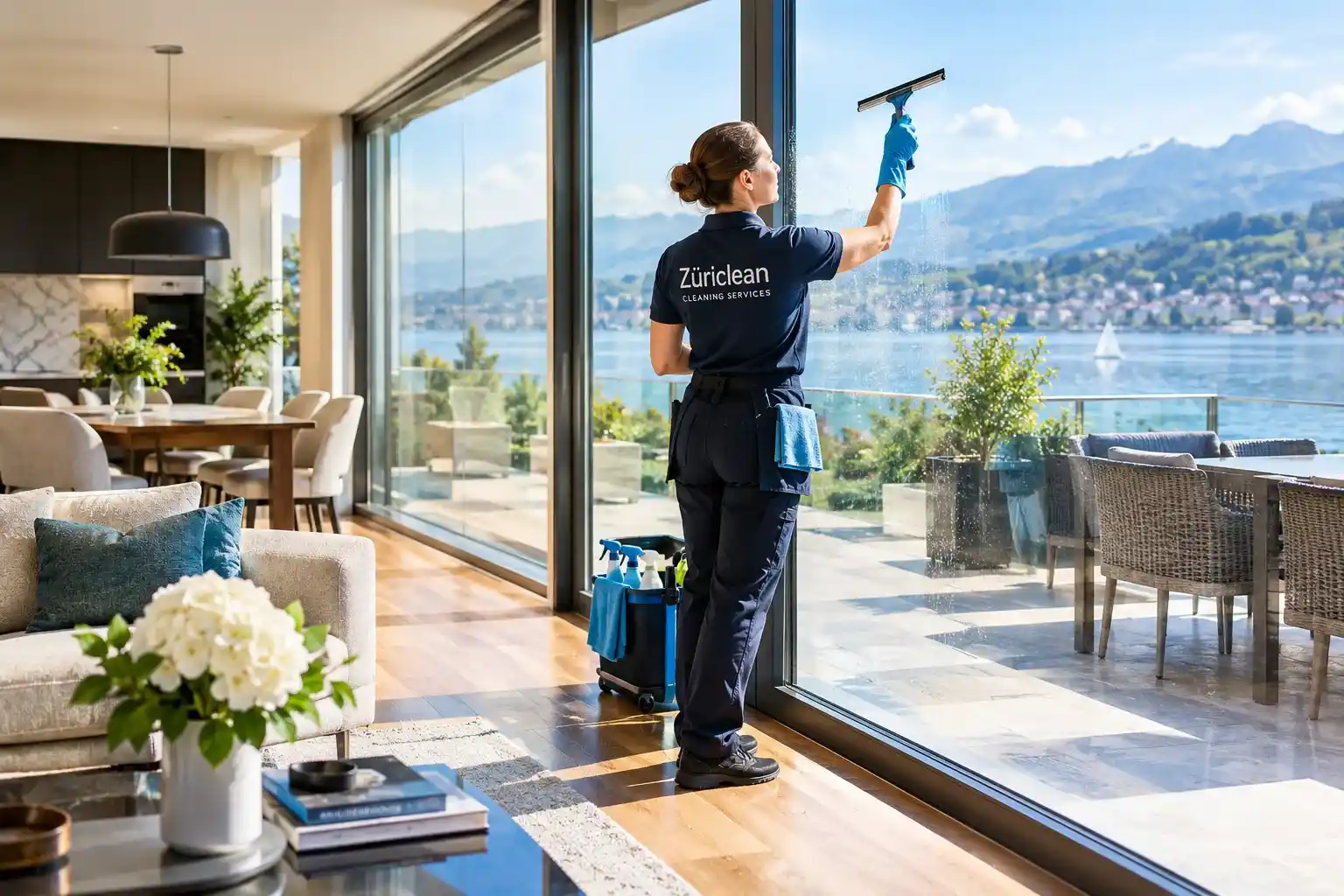
We offer building cleaning, staircase cleaning, maintenance cleaning, and building maintenance for administrations across Zurich. After a visit to the property, you receive a written proposal that lists areas, frequencies, and standards, so it can be used directly as the basis for your SLA.
As a registered Swiss company, we work with a stable team, clear communication, and flexible schedules. You can find our local coverage on the Zurich page or start from our homepage.
Conclusion
A good cleaning SLA is specific, measurable, and fair to both sides. It defines the scope, the frequency, the quality standard, and the way results are checked, and it sets clear rules for staffing, insurance, and communication.
For Zurich administrations, this means fewer complaints, more predictable results, and a stronger relationship with the provider. With a clear agreement in place, the daily cleaning of a building becomes something you can rely on.
Learn more about our building cleaning in Zurich and request your free, non-binding proposal today.
Frequently Asked Questions
What is a cleaning SLA?
A cleaning SLA is the part of a contract that defines what is cleaned, how often, to which standard, and how the result is checked. It turns general expectations into clear, measurable commitments for both sides.
What should a cleaning SLA for a property include?
It should include the scope of work, frequencies, a clear quality standard, inspections, reporting, response times for complaints, staffing arrangements, insurance, and notice periods. Each point should be specific enough to be checked.
How often should stairwells be cleaned?
Most buildings clean stairwells weekly or every second week. Busy buildings or those with many children and pets may need more visits, especially in autumn and winter, when mud and wet leaves increase dirt.
How can I check the quality of the cleaning?
Ask for a checklist after each visit, a short monthly report, and agree on spot checks. Photo documentation and a regular review meeting make quality visible and help to solve problems quickly.
Does Züriclean offer cleaning for property managers in Zurich?
Yes. We offer building cleaning, staircase cleaning, maintenance cleaning, and building maintenance across Zurich. After a visit, you receive a written proposal with areas, frequencies, and standards that can serve as the basis for your SLA.