


Maintaining hygiene in homes, offices, and public spaces often involves regular cleaning routines. However, cleaning alone does not always eliminate harmful microorganisms such as bacteria and viruses. While wiping surfaces removes visible dirt and debris, it may not fully address contamination risks in high-use environments. This is where professional disinfection services become relevant.
Disinfection focuses on reducing or eliminating microorganisms on surfaces using specialized chemicals and methods. Unlike routine cleaning, it is typically required in situations where hygiene risks are elevated, such as illness outbreaks, shared workspaces, or environments with high public interaction.
For businesses and property managers in Zurich, understanding when professional disinfection is necessary helps maintain safe indoor environments without relying on unnecessary treatments. Knowing the difference between routine cleaning and targeted disinfection allows organizations and households to apply the right hygiene measures at the right time.
Cleaning vs Disinfection: Understanding the Difference
Cleaning and disinfection are often used interchangeably, but they serve different purposes in maintaining hygiene. Understanding the distinction helps determine when professional disinfection services are actually necessary.
What Cleaning Does
Cleaning focuses on removing visible dirt, dust, grease, and debris from surfaces. This process typically involves water, detergents, and physical wiping or scrubbing. By removing contaminants, cleaning improves the appearance of spaces and reduces the number of microorganisms present.
However, cleaning does not necessarily kill bacteria or viruses. Microorganisms can remain on surfaces even after visible dirt has been removed.
What Disinfection Does
Disinfection involves using chemical agents specifically designed to kill or deactivate harmful microorganisms. These disinfectants are applied to surfaces after cleaning to reduce the presence of bacteria, viruses, and other pathogens.
The process is especially important for high-touch surfaces or environments where infection risks are higher, such as healthcare settings, shared workplaces, or public facilities.
Why the Difference Matters
Routine cleaning is sufficient for many everyday environments, but disinfection becomes important when hygiene risks increase. Using disinfectants unnecessarily can be inefficient, while skipping disinfection in high-risk situations may allow pathogens to spread.
Understanding how cleaning and disinfection work together helps maintain effective hygiene practices in both residential and commercial settings. Learn more about Züriclean’s comprehensive cleaning solutions that combine routine cleaning and professional disinfection for maximum hygiene.
Situations Where Professional Disinfection Is Necessary
Professional disinfection is most effective when applied in environments where the risk of microbial contamination is higher than usual. While routine cleaning maintains general hygiene, certain situations require targeted measures to reduce bacteria and virus transmission.
Illness Outbreaks
When contagious illnesses occur in homes, offices, or shared facilities, pathogens can remain on surfaces long after direct contact. Professional disinfection helps reduce the presence of microorganisms on high-touch areas such as desks, door handles, and shared equipment.
Shared Workspaces
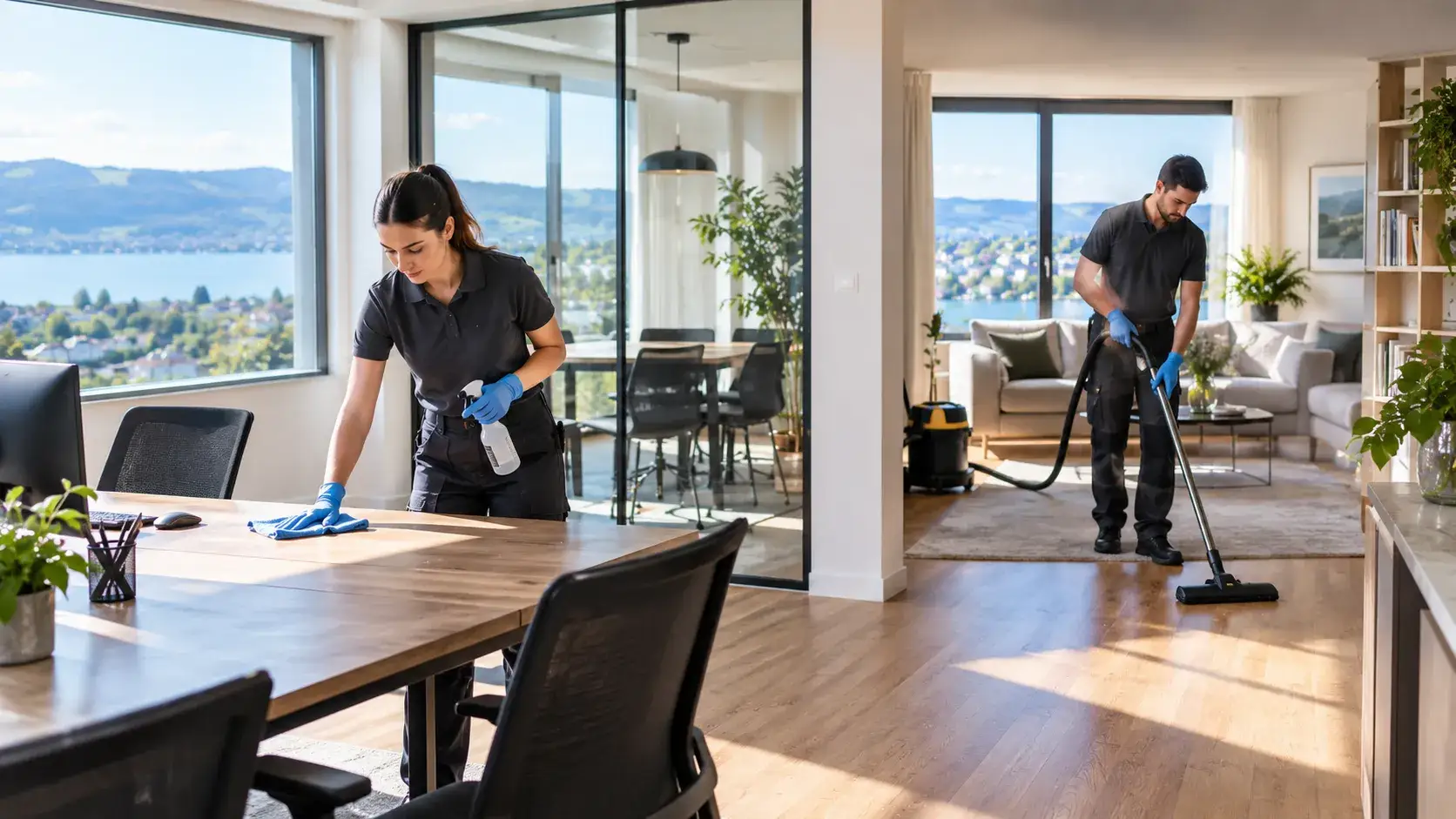
Offices with shared desks, meeting rooms, and common equipment can facilitate the spread of microorganisms between employees. Periodic disinfection of these areas helps maintain workplace hygiene and supports healthier indoor environments.
Healthcare and Care Facilities
Hospitals, clinics, and care centers require strict sanitation standards due to the presence of vulnerable individuals. Professional disinfection ensures that treatment rooms, waiting areas, and medical surfaces remain hygienic.
Schools and Childcare Centers
Educational environments involve frequent contact between students and shared surfaces. Disinfection helps reduce microbial spread in classrooms, cafeterias, and restrooms where multiple users interact with the same facilities.
Public and Commercial Spaces
Places such as restaurants, event venues, and public buildings receive high visitor traffic. Professional disinfection can be necessary when hygiene standards need to be reinforced after heavy usage or during periods of increased health concerns.
By identifying these situations, property managers and businesses can apply disinfection strategically rather than relying on it unnecessarily.
High-Touch Surfaces That Require Disinfection
High-touch surfaces are among the most common points where bacteria and viruses can spread. These surfaces are used frequently by multiple people throughout the day, increasing the likelihood of contamination. While routine cleaning removes visible dirt, targeted disinfection helps reduce microorganisms that may remain on these contact points.
Door Handles and Entry Points
Door handles, push plates, and access panels are touched repeatedly by different individuals. In offices, commercial buildings, and public facilities, these surfaces can quickly accumulate microorganisms if they are not disinfected regularly.
Elevator Buttons and Control Panels
Elevator controls and shared building panels receive constant contact from visitors and employees. Because these surfaces are small and frequently used, they can easily transfer microbes between users.
Light Switches and Handrails
Light switches, stair railings, and corridor handrails are often overlooked during routine cleaning. However, they are handled frequently and can act as transmission points in busy buildings.
Shared Work Equipment
In offices and commercial environments, shared tools and equipment such as keyboards, touch screens, printers, and telephones are used by multiple people. Disinfecting these items helps reduce cross-contamination between users.
Restroom Surfaces
Restroom fixtures—including faucet handles, flush buttons, and door locks—are among the most frequently touched surfaces in any building. Regular disinfection in these areas is essential to maintain hygiene standards.
Focusing disinfection efforts on these high-contact surfaces helps limit the spread of microorganisms in both residential and commercial environments.
Disinfection in Offices and Commercial Spaces
Shared Workstations and Meeting Rooms
Desks, conference tables, keyboards, telephones, and touch screens are used by multiple people. Regular disinfection of these surfaces reduces bacteria and virus transmission.
Restrooms and Kitchen Areas
Faucet handles, appliance buttons, and shared utensils are high-contact points in offices. Professional disinfection maintains hygiene and prevents microbial buildup.
Reception and Visitor Zones
Entrances, check-in counters, and seating areas see frequent visitor contact. Targeted disinfection ensures a clean environment and lowers contamination risks.
Residential Disinfection: When Homes Need It
Illness in the Household
When a family member is sick, microorganisms can remain on high-touch surfaces like door handles, light switches, and bathroom fixtures. Professional disinfection helps reduce the risk of further spread.
Move-In or Move-Out Cleaning
Disinfection before or after moving into a property ensures that high-contact areas and shared surfaces are hygienic for new occupants.
Post-Renovation or Contamination
Homes affected by mold, water damage, or renovation dust may require targeted sanitation. Disinfection removes microbes that ordinary cleaning cannot fully address.
Routine vs Targeted Disinfection
Routine disinfection is generally unnecessary for most homes. It becomes valuable only when contamination risks are elevated or after specific events requiring deeper sanitation.
Methods Used in Professional Disinfection
Professional disinfection involves specialized techniques and equipment to ensure surfaces are thoroughly sanitized. These methods are more effective than routine cleaning and are designed to reach areas that are often missed in everyday maintenance.
Chemical Disinfectants
Trained professionals use hospital-grade or commercial disinfectants formulated to kill bacteria, viruses, and other pathogens. These chemicals are applied to high-touch surfaces and areas with higher contamination risks to ensure effective sanitation.
Electrostatic Spraying
Electrostatic sprayers charge the disinfectant solution so it evenly coats surfaces, including hard-to-reach areas. This method ensures complete coverage and is particularly useful for large office spaces, classrooms, and healthcare facilities.
Fogging Systems
Fogging disperses disinfectant in fine mist form, allowing it to reach corners, ceilings, and behind equipment. Fogging is often used in industrial spaces, event venues, and post-illness sanitization scenarios.
Targeted Surface Sanitation
For areas with concentrated use or high contamination risk, professionals may apply disinfectants directly to specific surfaces. This includes doorknobs, light switches, elevator buttons, keyboards, and restroom fixtures.
By using these techniques, professional disinfection ensures a higher level of hygiene than routine cleaning alone, reducing the risk of pathogen transmission in homes, offices, and commercial spaces.

.webp)




.webp)


.webp)


_11zon.webp)


.webp)


