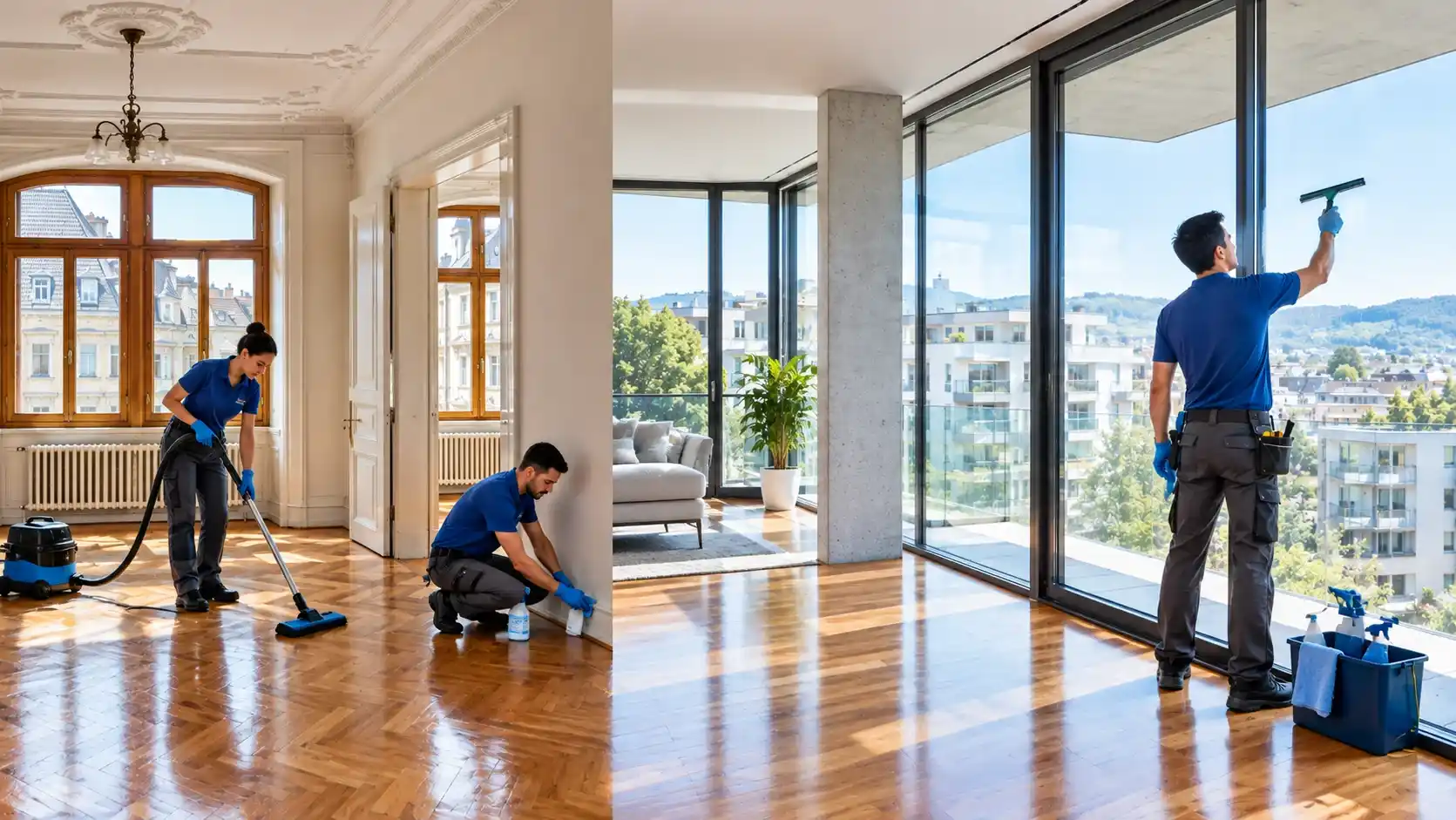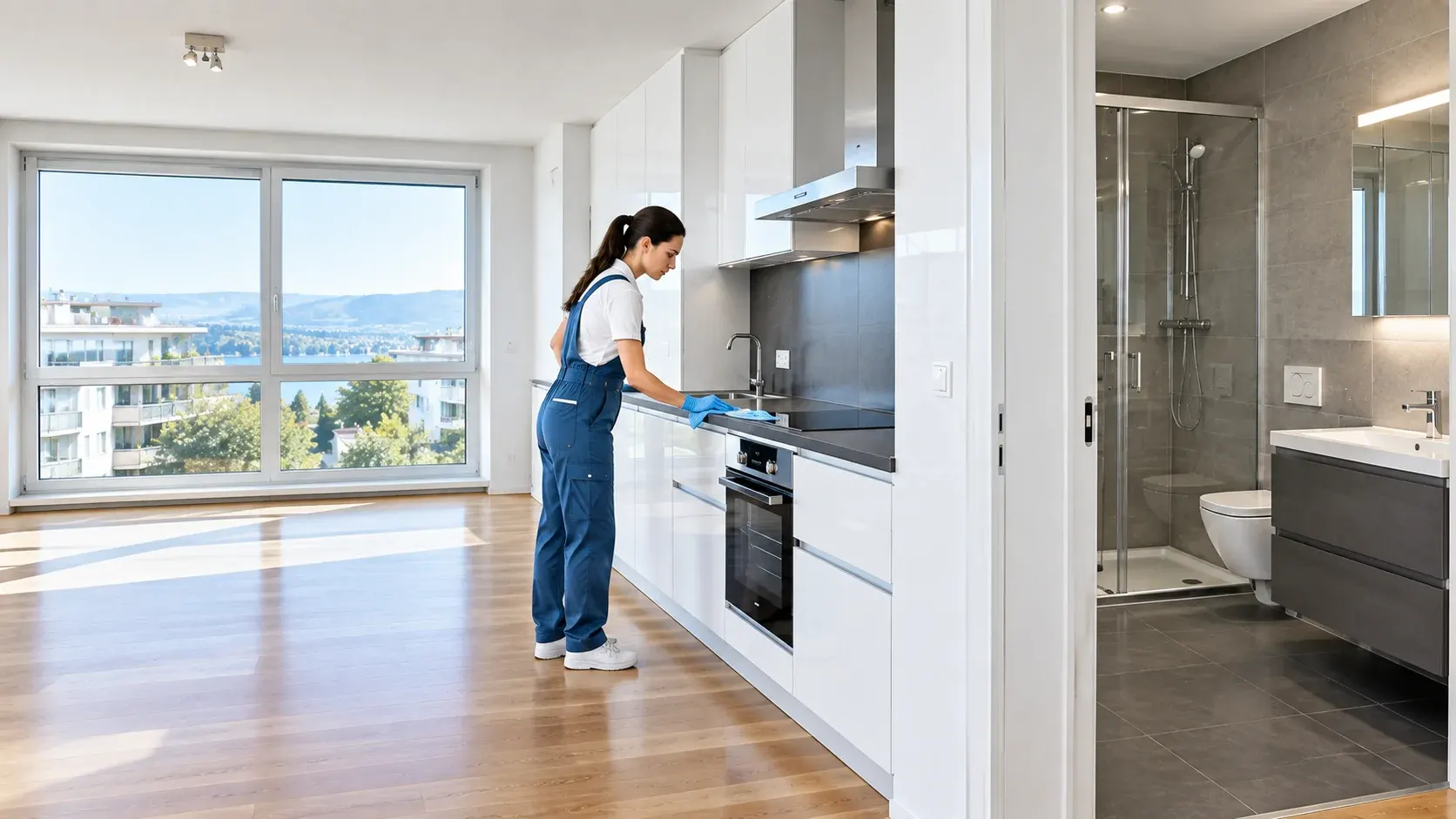

Few things lead to more complaints than a cleaning contractor who does not deliver. Residents notice dirty stairwells within days, and the property manager is the one who answers the phone. Choosing the right partner at the start saves time, money, and frustration later. Our building cleaning in Zurich is designed for administrations that want this reliability from the first visit.
This guide explains how property managers in Zurich choose a reliable cleaning contractor, which criteria matter, which questions to ask, and which warning signs to watch for.
Start With Your Own Requirements
Before you contact any provider, write down what you actually need. A clear picture of the property makes every offer easier to compare.
• The property: number of buildings, floors, lifts, and shared areas.
• The users: number of residents, families with children, and pets.
• The tasks: stairwells, entrances, windows, cellar corridors, and waste rooms.
• The rhythm: how often each area should be cleaned.
• The special needs: sensitive surfaces, access rules, and noise restrictions.
Key takeaway: a contractor can only give you a precise offer if you describe the property precisely.
The Criteria That Matter Most
The table below summarises the main criteria and what to look for. Use it as a scoring sheet when you compare two or three contractors.
|
Criterion |
What to Look For |
|
Local presence |
A registered company with a Zurich address and a reachable contact person. |
|
Experience |
References from comparable properties, such as residential buildings of a similar size. |
|
Team stability |
A fixed team for your building, not a different group every week. |
|
Insurance |
Proof of liability insurance for damage during the work. |
|
Clear proposal |
A written list of areas, tasks, and frequencies after a visit to the property. |
|
Communication |
Fast replies, a named contact, and a clear complaint process. |
|
Products |
Certified, non-toxic products that suit the surfaces in your building. |
|
Flexibility |
Ability to adjust the schedule for extra jobs and seasonal needs. |
Questions to Ask in the First Conversation
A short conversation reveals a lot. The way a contractor answers is often more telling than the answer itself.
1. Who will clean our building?
Ask whether the same team comes each time, and how substitutes are arranged during sickness and holidays.
2. How do you check your own work?
Look for a checklist after each visit and a regular review, not only a promise of good quality.
3. How do you handle complaints?
A reliable provider names a contact, a response time, and the way problems are corrected.
4. Which properties do you clean already?
Ask for references and contact them if possible.
5. What happens if something is damaged?
Ask about liability insurance and how claims are processed.
Why a Site Visit Is Non-Negotiable
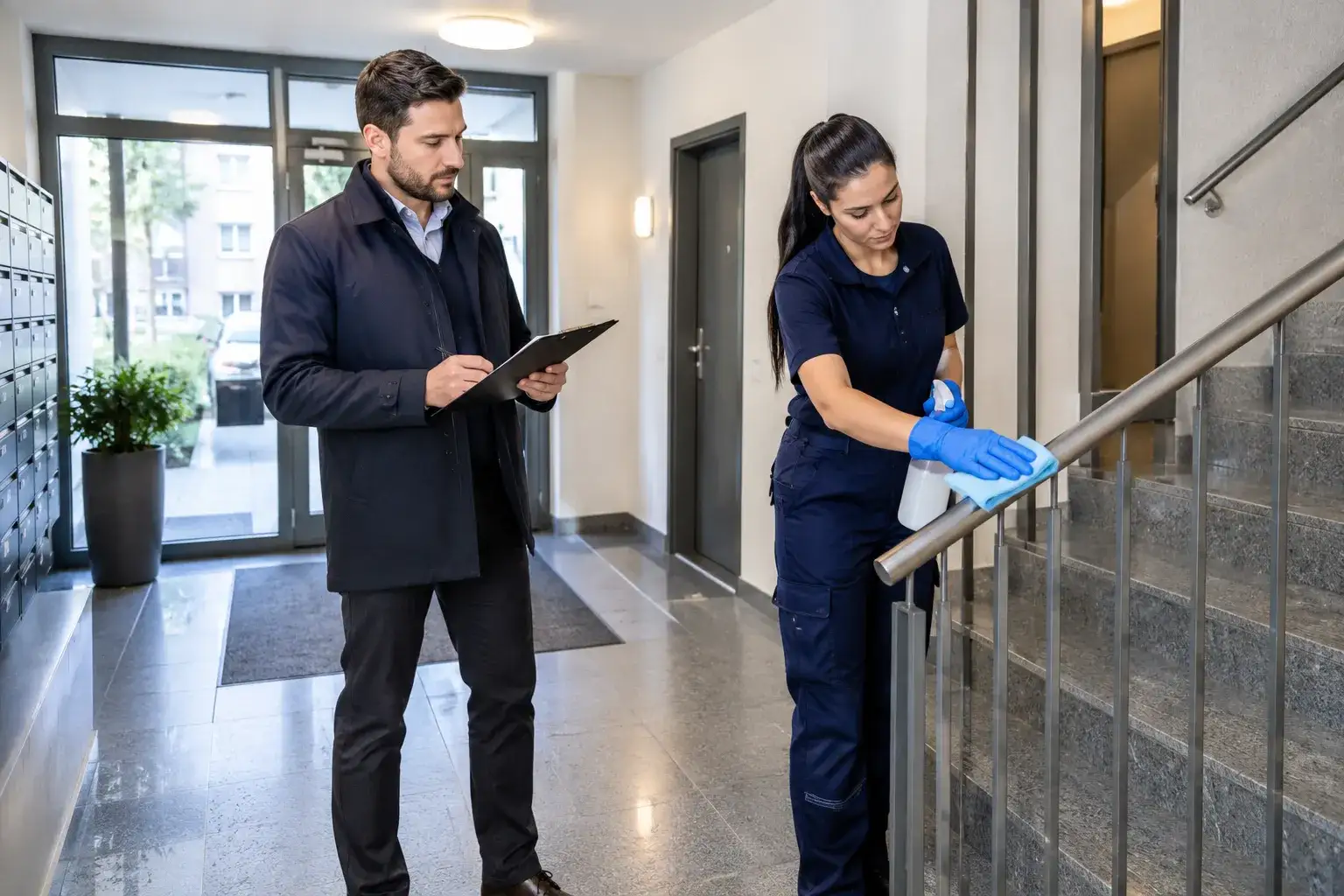
An offer made without seeing the property is a guess. A short site visit allows the contractor to measure areas, check surfaces, and understand access. It also shows how seriously the provider takes your building.
After a visit, our team prepares a written proposal that lists areas, tasks, and frequencies. You can use it directly to compare offers or as the basis for your contract. This also works well for staircase cleaning and maintenance cleaning.
Red Flags and Green Flags
Some signals appear early in the process. They help you decide faster.
|
Warning Sign |
Positive Sign |
|
Offer without a visit or a clear task list |
Written proposal with areas, tasks, and frequencies |
|
Vague promises such as "we clean everything" |
Specific description of what is included and excluded |
|
No references or proof of insurance |
References and insurance provided on request |
|
Slow or unclear communication |
Fast replies and a named contact person |
|
Constantly changing staff |
A stable team that knows the building |
|
Pressure to sign immediately |
Time to compare and a trial period offered |
Compare Offers Fairly
Comparing offers is easier when every contractor receives the same information and answers the same questions. The lowest offer is not always the best, because it may leave out tasks that others include.
• Give each contractor the same description of the property.
• Check that all offers list the same areas and frequencies.
• Look at what is excluded, because extras can change the total quickly.
• Compare notice periods and the length of the contract.
• Consider reliability and communication, not only the price.
It also helps to ask for a short explanation of how each contractor would organise the work in your building. A clear plan, with days, tasks, and responsibilities, shows that the provider has understood the property.
Run a Trial Period Before You Commit
A trial period of a few weeks shows how the contractor works in practice. It reduces the risk for both sides and gives you real data instead of promises.
• Define success: agree on two or three points you will check, such as punctuality, quality, and response to feedback.
• Check early: inspect the building after the first and the second visit.
• Ask residents: a short comment from a few residents is often very helpful.
• Hold a review: meet at the end of the trial and decide together how to continue.
Onboarding: Making the Start Smooth
Even a good contractor needs a clear start. A short onboarding prevents misunderstandings during the first weeks.
• Hand over keys and access codes with a written record.
• Show the team the technical rooms, waste rooms, and supply points.
• Introduce the contact person to the residents with a notice in the entrance.
• Agree on the first review date.
What Reliability Looks Like in Daily Practice
A reliable contractor is not the one who promises the most. It is the one whose work is predictable, visible, and easy to discuss.
• Punctuality: the team arrives on the agreed days and times, and tells you early if something changes.
• Consistency: the result looks the same in week one and in week twenty.
• Transparency: you receive short reports or checklists without having to ask.
• Problem solving: when a complaint arrives, the contractor corrects the issue and explains what happened.
These qualities are hard to judge from a brochure, which is why references and a trial period are so valuable.
A Typical Scenario: Replacing an Unreliable Contractor
Imagine a residential building where stairwells were cleaned irregularly, and residents complained about the entrance. The property manager decides to change the contractor.
First, the manager writes down the real needs of the building. Then three providers visit the property and send written proposals. After comparing areas, frequencies, and references, the manager chooses one and agrees on a six-week trial. After the first month, a short review confirms that the quality is stable, and the contract continues.
This process takes a little more time at the start, but it prevents a second change a few months later.
It is also important to end the previous relationship properly. Check the notice period, collect keys and access codes, and record the handover state in writing. This way, the new cooperation begins without open questions.
Common Mistakes to Avoid
• Choosing the lowest offer alone.
• Signing without a visit or a written task list.
• Skipping references and insurance checks.
• Not agreeing on how complaints are handled.
• Forgetting to plan a review after the first few weeks.
How Züriclean Supports Property Managers
We offer building cleaning, staircase cleaning, maintenance cleaning, and building maintenance for administrations across Zurich, with a stable team and a clear written proposal after a visit.
As a registered Swiss company, we work with flexible schedules and clear communication. You can find our local coverage on the Zurich page or start from our homepage.
Conclusion
Choosing a reliable cleaning contractor is easier with a clear process. Define your requirements, compare a few providers on the same criteria, ask the right questions, and watch for warning signs early.
A site visit, a written proposal, and a short trial period turn promises into proof. For Zurich property managers, this means fewer complaints, more satisfied residents, and a partner you can rely on every day.
Learn more about our building cleaning in Zurich and request your free, non-binding proposal today.
Frequently Asked Questions
How do I choose a cleaning contractor for a property in Zurich?
Define your requirements first, then compare two or three providers on the same criteria: local presence, references, team stability, insurance, and a clear written proposal after a site visit. A short trial period confirms the choice.
What questions should I ask a cleaning contractor?
Ask who will clean your building, how quality is checked, how complaints are handled, which references they have, and what happens in case of damage. Clear and specific answers are a good sign of reliability.
Is the cheapest cleaning offer the best choice?
Not always. A low offer may leave out tasks, use a changing team, or lack insurance. Compare what is included, how communication works, and how they handle complaints, not just the total amount.
How long should a trial period last?
A four- to eight-week trial period is usually enough to judge punctuality, quality, and communication. Agree on success points in advance, inspect early, and hold a review meeting at the end.
Does Züriclean work with property managers in Zurich?
Yes. We offer building cleaning, staircase cleaning, maintenance cleaning, and building maintenance across Zurich. After a site visit, you receive a written proposal with areas, tasks, and frequencies for a fair comparison.