
A new building can look finished and still fail its handover. Fine dust on every surface, paint splashes on window frames, and protective floor foil are enough to trigger a defect list and delay key handover. Our post-construction cleaning in Zurich prepares new buildings for exactly this moment.
This guide explains what Zurich developers need to plan for new-build handover cleaning, which cleaning stages are involved, how to schedule them, and how to check that the building is ready.
Why Handover Cleaning Matters for Developers
Handover is when the buyer or owner judges the building. A clean building shows care and builds trust, while a dusty one invites criticism, even if the construction itself is excellent.
• First impression: buyers and tenants judge the whole project by what they see on the day.
• Faster acceptance: a clean building makes it easier to see real defects, because dust does not hide them.
• Fewer repeat visits: cleaning after the handover is expensive and interrupts move-in.
• Protection of finishes: the right methods protect new floors, glass, and fittings from scratches.
For developers who sell many units, a consistent handover standard also supports the brand. Buyers talk to each other, and a clean, well-prepared building is often the detail they mention first.
The Stages of New-Build Cleaning
Cleaning a new building is not a single step. It follows the construction process in stages, so each phase of work leaves a clean base for the next.
|
Stage |
Timing |
Main Goal |
|
Rough cleaning |
During or after the main construction work |
Remove debris, cement residue, and coarse dust so trades can continue safely. |
|
Intermediate cleaning |
Between trades, for example before painting or flooring |
Keep working areas free from dust and protect finished surfaces. |
|
Final cleaning |
After the last trade has finished |
Prepare every room for the handover inspection. |
|
Touch-up cleaning |
After the inspection and any repairs |
Correct small points and remove new dust before the keys change hands. |
Key takeaway: the final cleaning only works if it comes after the last trade. Cleaning too early means that dust from remaining work will spoil the result.
What Final Cleaning Covers Area by Area
A good final cleaning follows a checklist for each part of the building. The table below shows the most common points.
|
Area |
Typical Cleaning Tasks |
|
Windows and doors |
Remove paint, sealant, and stickers, and clean glass, frames, and sills. |
|
Floors |
Remove protective foil and residue, and clean tiles, parquet, or stone with suitable methods. |
|
Kitchen |
Clean cupboards inside and outside, worktops, sink, and appliances. |
|
Bathrooms |
Remove cement and grout haze, and clean sanitary ware, tiles, and fittings. |
|
Walls and ceilings |
Dust surfaces, switches, sockets, and light fittings. |
|
Stairwells and lifts |
Clean handrails, steps, lift cabins, and entrance areas. |
|
Cellar and garage |
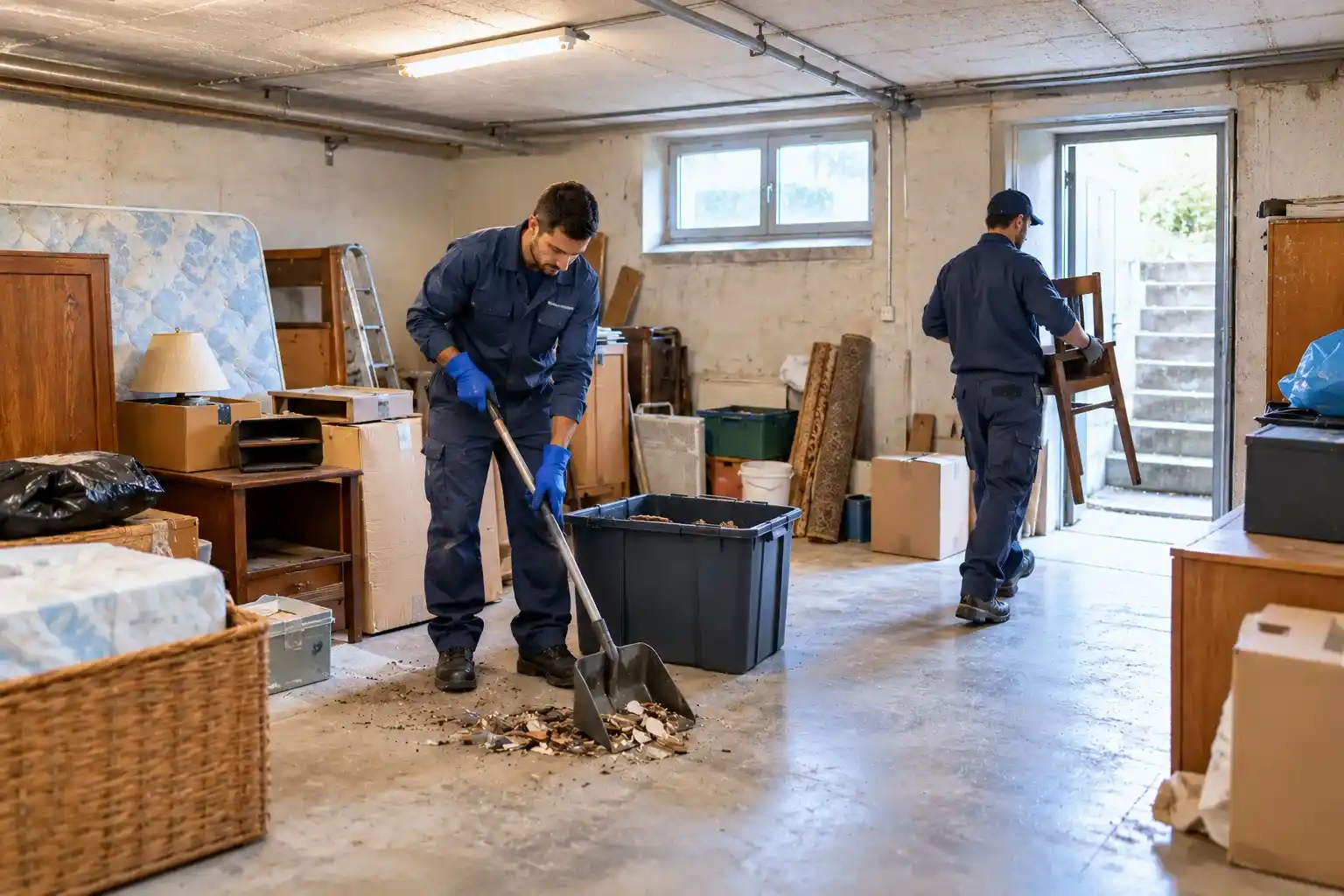
Sweep and clean storage rooms, corridors, and parking areas. |
|
Balconies and terraces |
Remove construction dust and clean surfaces and railings. |
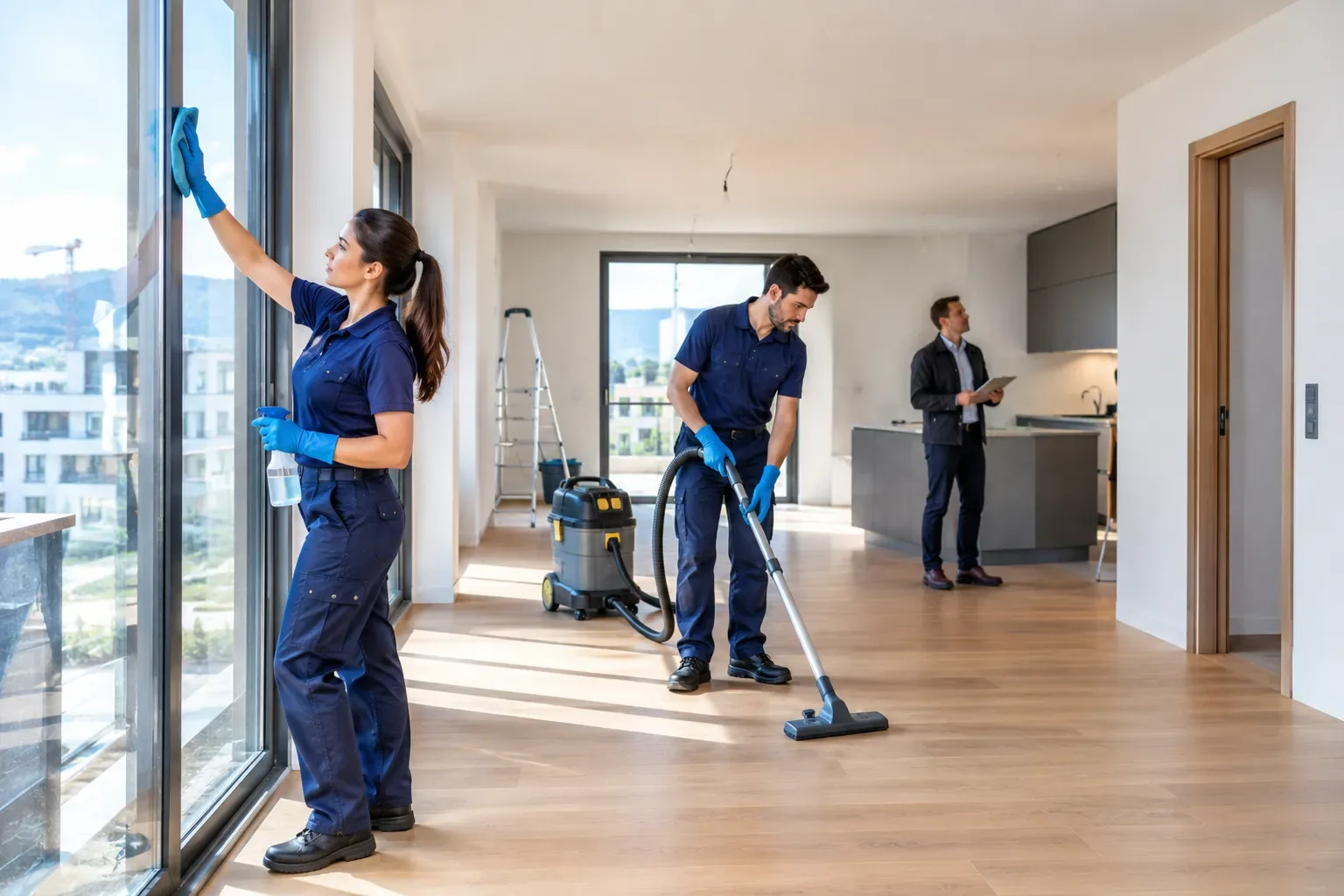
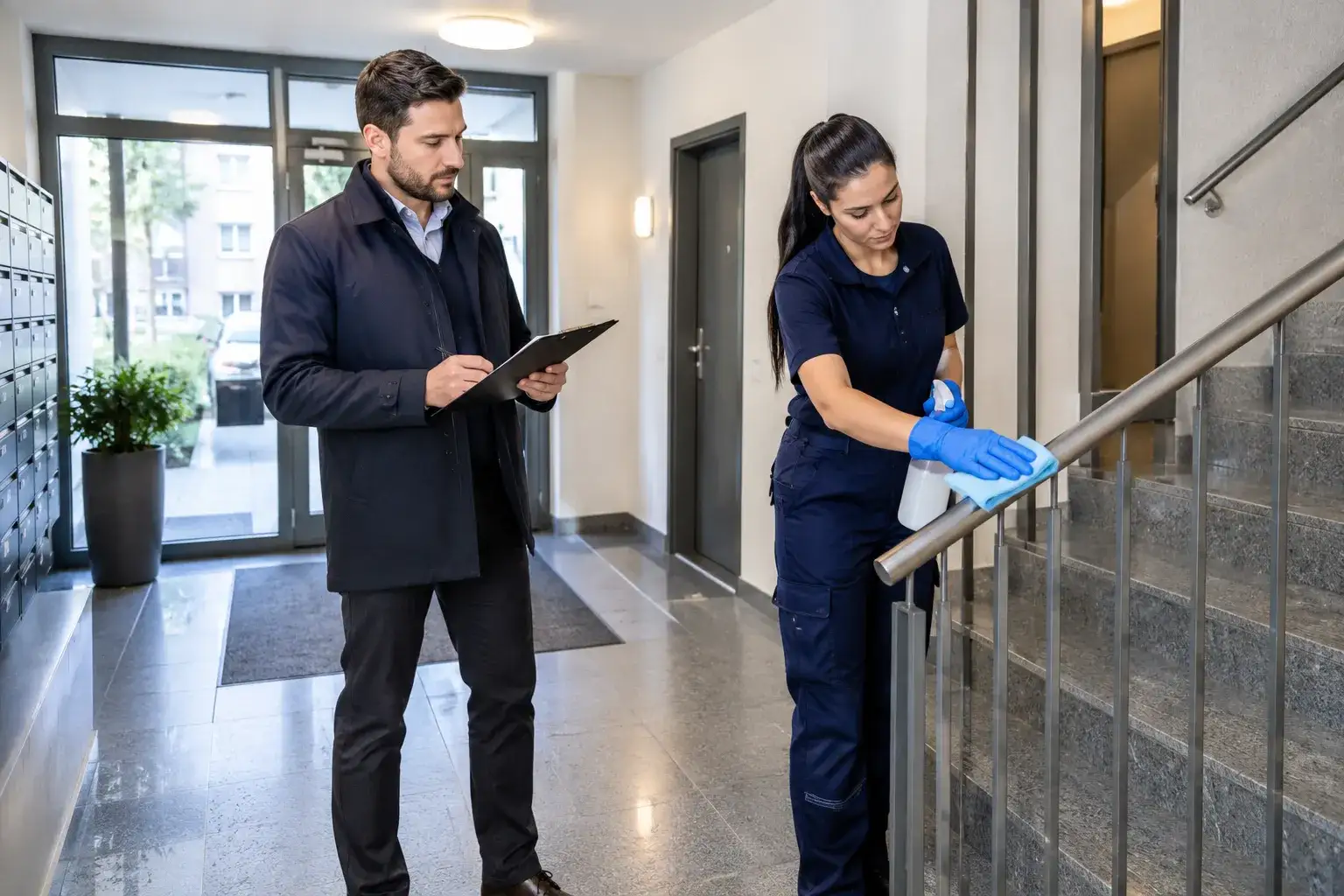
We offer window cleaning and floor cleaning as part of the final cleaning, and our staircase cleaning covers entrances and stairwells.
Typical Residues in a New Build
New buildings carry residues that normal cleaning does not remove. Knowing them in advance helps you choose the right provider and the right methods.
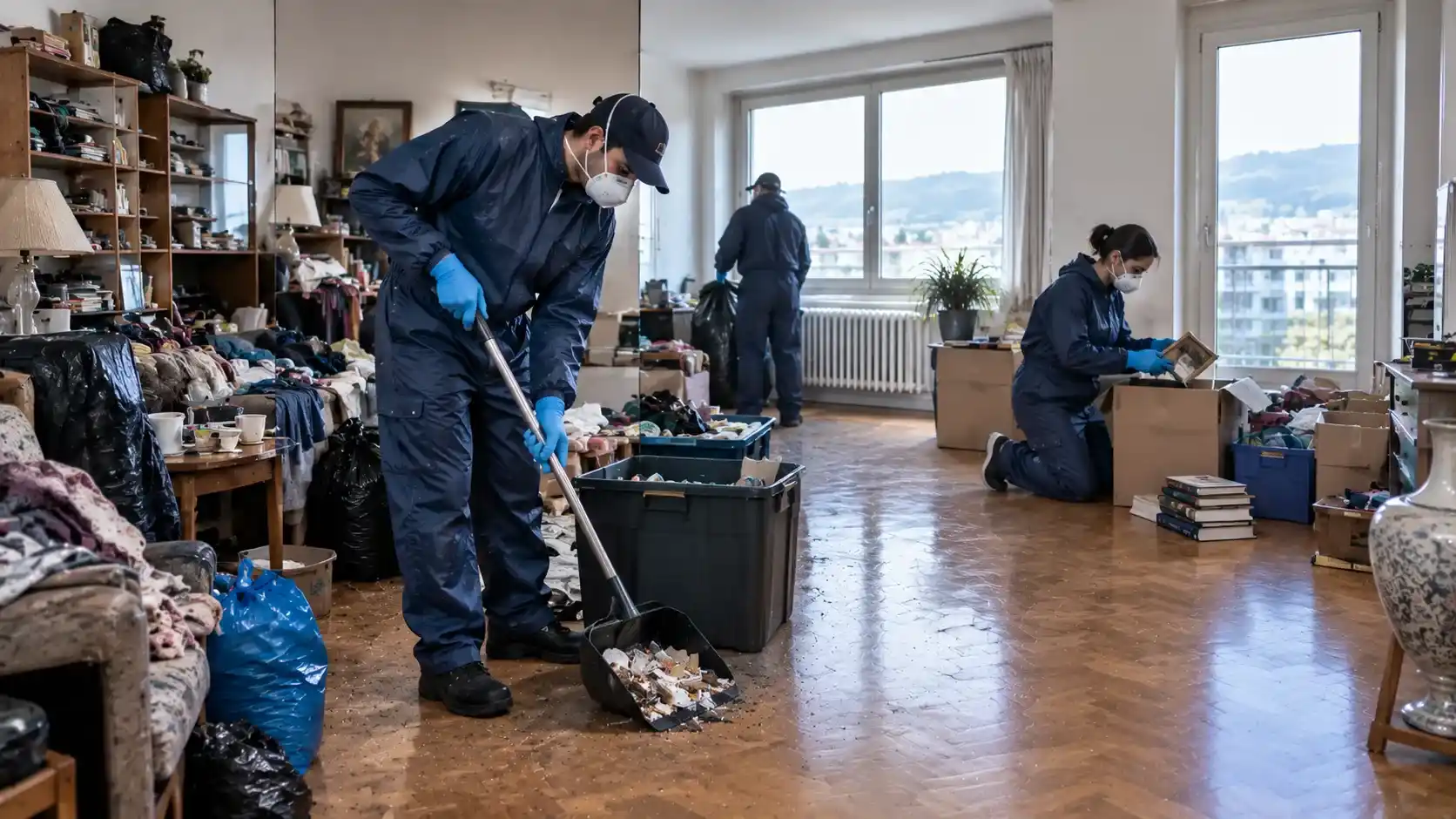
• Fine mineral dust from plaster, screed, and drilling.
• Paint splashes and adhesive on glass and frames.
• Cement haze and grout residue on tiles and sanitary ware.
• Silicone smears and sealant traces around windows and bathrooms.
• Protective foil, tape, and labels on windows, floors, and appliances.
Using the wrong method on these residues can scratch glass or damage surfaces. This is why experienced teams work with suitable tools and products for every material.
When to Book the Cleaning
Timing is one of the biggest challenges for developers. The cleaning has to fit into a tight window between the last trade and the inspection.
1. Plan early
Include the cleaning in the construction schedule and book the provider several weeks ahead.
2. Share the schedule
Give the cleaning company the dates of the last trades and the handover inspection.
3. Visit the site
A short visit allows the provider to see the size, the access, and the condition of the building.
4. Keep the window free
Make sure no trades work in the building during the final cleaning.
5. Plan a buffer
Leave a day or two between the final cleaning and the inspection for corrections.
Coordination With the Site Team
Good cleaning depends on good communication. A short coordination meeting with the site manager prevents most problems.
• Access: agree on keys, access codes, lifts, and working hours.
• Utilities: make sure water and electricity are available during the cleaning.
• Priorities: tell the team which units or areas are needed first.
• Protection: mark surfaces that are still protected or not yet finished.
• Contact: name one person who answers questions on site.
The Handover Inspection: What Inspectors Look At
During the inspection, buyers or owners walk through each unit and note defects. A clean building makes this walk shorter and calmer.
Inspectors usually check windows, floors, kitchens, bathrooms, and shared areas. If the project follows standard construction rules, such as those commonly used for acceptance in Switzerland, the result is recorded in a protocol. Please check your contract for the exact terms.
• Windows are clean and free from paint and sealant traces.
• Floors are free from residue and scratches.
• Sanitary ware and fittings are clean and free from cement haze.
• Kitchens are clean inside and outside.
• Common areas look welcoming and tidy.
Protecting New Surfaces During Cleaning
New surfaces are easy to damage, and a scratch on a fresh window or a dull patch on a new floor becomes a defect. The method matters as much as the effort.
• Glass: use suitable blades and soft tools, and soften residues before removing them.
• Parquet and wood: use only moisture-controlled methods and products that suit the finish.
• Natural stone: avoid acidic cleaners, which can leave marks.
• Stainless steel and fittings: use soft cloths and non-abrasive products to prevent scratches.
Ask the provider how it protects surfaces. A clear and confident answer is a good sign of experience.
Common areas also deserve a last look. The entrance, the mailboxes, the lift, and the stairwell are the first things new residents see, and they shape the impression of the whole building.
After the Handover: Cleaning Before Move-In
Even after a careful handover, new owners and tenants often want a fresh start before they move in. Construction dust settles slowly, and a last light cleaning can make a big difference.
For occupied units, our apartment cleaning is a good follow-up. It keeps the new home fresh and gives buyers the sense that the building is well looked after from the first day.
Developers who offer this extra step often receive better feedback from buyers, and it reduces calls about small cleaning points after the keys have changed hands.
Common Mistakes to Avoid
• Booking the final cleaning before the last trade has finished.
• Leaving the cleaning to the last day without a buffer.
• Using household cleaners on construction residues.
• Not protecting finished surfaces during the work.
• Choosing a provider without experience in new builds.
How Züriclean Supports Developers in Zurich
We offer post-construction cleaning and building cleaning for new buildings across Zurich. After a site visit, you receive a written proposal with stages, areas, and dates that fit your construction schedule.
As a registered Swiss company, we work with trained teams, suitable equipment, and clear communication. You can find our local coverage on the Zurich page or start from our homepage.
Conclusion
A successful handover depends on a building that is not only finished but also clean. Plan the cleaning in stages, book the final cleaning after the last trade, and coordinate closely with the site team.
With the right timing and an experienced provider, the inspection is shorter, defects are easier to see, and the keys change hands on schedule. For Zurich developers, this protects both the project's reputation and the relationship with the new owners.
Learn more about our post-construction cleaning in Zurich and request your free, non-binding proposal today.
Frequently Asked Questions
What is post-construction cleaning?
Post-construction cleaning removes dust, debris, paint splashes, cement residue, and protective foil after building work. It prepares a new or renovated property for the handover inspection and for the first use by owners or tenants.
When should the final cleaning take place?
The final cleaning should take place after the last trade has finished and before the handover inspection. Leave a buffer of one or two days for corrections, so the building looks its best when the keys change hands.
Why is normal cleaning not enough for a new build?
New buildings contain fine mineral dust, cement haze, paint, and sealant residues that household methods can't safely remove. Suitable tools and products protect glass, floors, and fittings from scratches and damage.
Do you clean in several stages?
Yes. We can plan cleaning in stages, such as rough, intermediate, final, and touch-up cleaning. This keeps working areas safe and leaves a clean base for each trade, up to the handover.
Does Züriclean offer cleaning for new builds in Zurich?
Yes. We offer post-construction cleaning and building cleaning for new buildings across Zurich. After a site visit, you receive a written proposal with stages, areas, and dates that fit your construction schedule.